
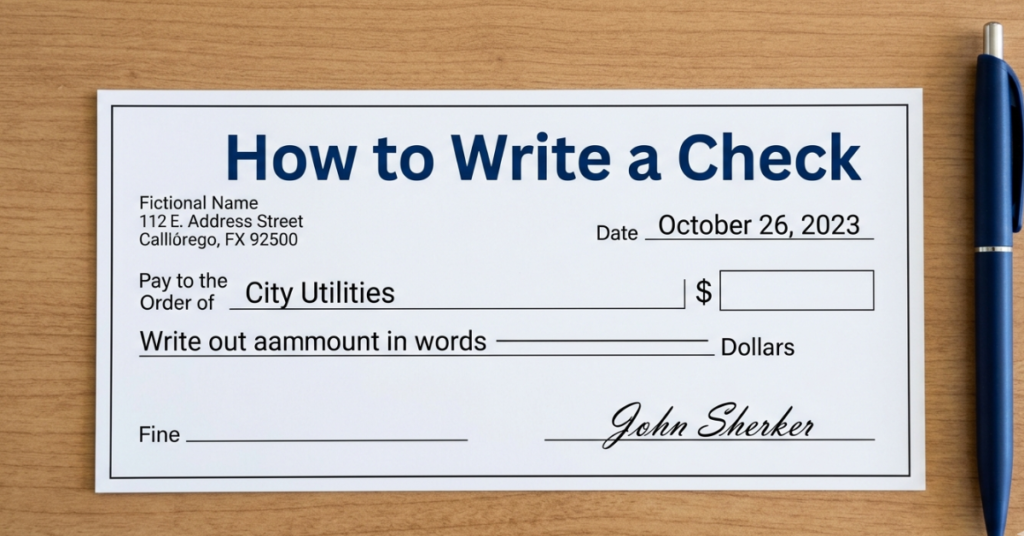

In a world of digital payments, writing a check might feel outdated—but it’s still an essential skill. Whether you’re paying rent, sending money, or handling business transactions, knowing how to write a check correctly can save you from costly mistakes.
The process is simple once you understand each part. In this guide, you’ll learn step-by-step instructions, real examples, and helpful tips to make sure every check you write is accurate and secure.
What Is a Check and Why It Still Matters
A check is a written order directing your bank to pay a specific amount to a person or business. Even today, checks are commonly used for:
- Rent or utility payments
- Business transactions
- Government or official purposes
- Situations where digital payments aren’t accepted
Parts of a Check You Need to Know
Before learning the steps, it’s important to understand what each section means:
- Date line: When the check is written
- Payee line: Who will receive the money
- Amount box: Numeric value of the payment
- Amount line: Written value in words
- Memo line: Optional note (e.g., “Rent for March”)
- Signature line: Your authorization
How to Write a Check (Step-by-Step)
Follow these simple steps to fill out a check correctly:
1. Write the Date
Add the current date in the top right corner. This helps track when the check was issued.
2. Add the Payee Name
Write the name of the person or business you’re paying on the “Pay to the Order of” line.
3. Enter the Amount in Numbers
In the small box, write the amount using numbers (e.g., 100.50).
4. Write the Amount in Words
On the long line, spell out the amount in words:
- Example: One hundred and 50/100
5. Fill the Memo (Optional)
Use this space to describe the purpose of the payment.
6. Sign the Check
Sign your name exactly as it appears on your bank account.
How to Write a Check with Cents
Including cents is easy once you know the format.
- Write the dollar amount in words
- Add cents as a fraction over 100
Example:
$45.75 → Forty-five and 75/100
This ensures there’s no confusion about the exact amount.
How to Write a Check with Thousands and Cents
When dealing with larger amounts, clarity is key.
Example:
$1,250.80 → One thousand two hundred fifty and 80/100
Tips:
- Avoid abbreviations
- Write clearly and legibly
- Double-check both numeric and written values
Sample: How to Write a Check
Here’s a simple example for better understanding:
- Date: March 30, 2026
- Payee: John Smith
- Amount (numbers): $1,000.00
- Amount (words): One thousand and 00/100
- Memo: Rent payment
- Signature: Your name
How to Write a Check for 1000
Writing a round figure is straightforward:
- Numeric box: 1000.00
- Written line: One thousand and 00/100
Even if there are no cents, always include “00/100” for accuracy.
Tips to Avoid Mistakes
Small errors can make a check invalid. Keep these tips in mind:
- Use black or blue ink only
- Don’t leave blank spaces (draw a line if needed)
- Double-check spelling of names
- Match numeric and written amounts
- Avoid overwriting—start a new check if needed
Security Tips When Writing Checks
Protect yourself from fraud with these simple practices:
- Never sign a blank check
- Store your checkbook in a safe place
- Monitor your bank statements regularly
- Use permanent ink to prevent alterations
FAQs
Can I write a check to myself?
Yes, simply write your own name as the payee. This is useful for transferring money between accounts.
What happens if I make a mistake?
It’s best to void the check and write a new one instead of correcting it.
Is the written amount or numeric amount more important?
Banks usually rely on the written amount if there’s a discrepancy.
Do I need to include cents every time?
Yes, even if it’s zero, write it as “00/100” to avoid confusion.
Can I post-date a check?
You can, but not all banks guarantee they will honor the future date.
Conclusion
Learning how to write a check is a simple but valuable skill that still holds importance today. By understanding each section and following a clear step-by-step approach, you can avoid mistakes and handle payments with confidence.
Whether you’re writing a small amount or a large one with cents, accuracy is everything. Practice a few times, and soon it’ll feel as natural as sending a text.