

Waking up with itchy bites or spotting tiny stains on your sheets can be unsettling. If you’re wondering how to check for bed bugs, you’re not alone—these pests are more common than most people think.
This guide breaks everything down in a simple, practical way so you can identify signs early, whether you’re at home or traveling. By the end, you’ll know exactly what to look for and what steps to take next.
What Are Bed Bugs and Why Should You Care?
Bed bugs are small, reddish-brown insects that feed on human blood, usually at night. They’re excellent at hiding and can spread quickly through luggage, clothing, and furniture.
The real problem? They’re hard to detect early and even harder to eliminate if ignored.
Common Signs to Look For
Before diving into how to check for bed bugs, it’s important to recognize the early warning signs.
1. Bite Marks on Skin
- Small, red, itchy bumps
- Often in a line or cluster
- Usually appear on arms, legs, or back
2. Blood Stains on Sheets
Tiny rust-colored spots may appear where bugs were crushed after feeding.
3. Dark Droppings
These look like small black dots (similar to pepper) and are often found on mattresses or furniture.
4. Musty Odor
A strong, unpleasant smell can indicate a larger infestation.
How to Check for Bed Bugs at Home
If you suspect an issue, here’s a simple step-by-step method to inspect your space effectively.
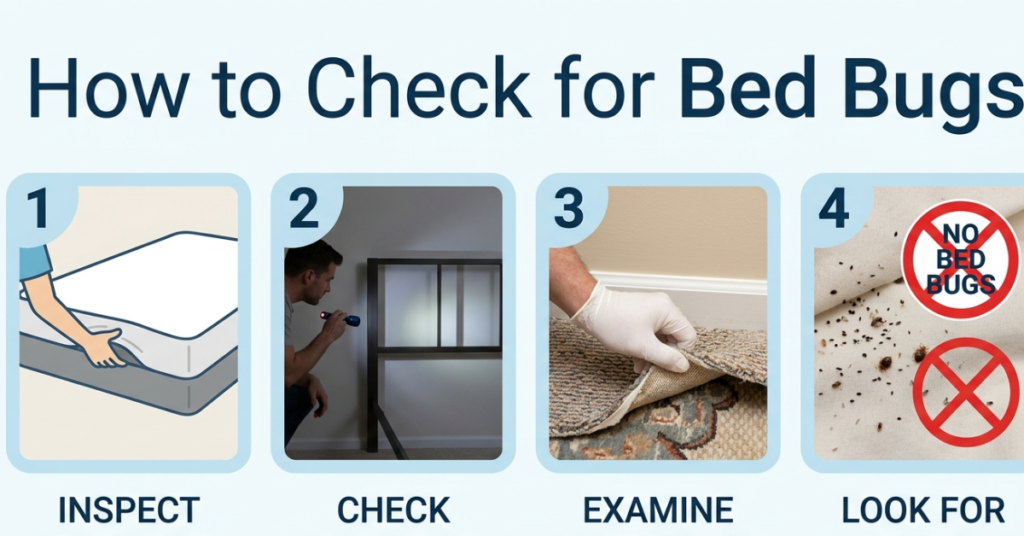
Step 1: Inspect Your Mattress
Start with the most obvious place.
- Check seams, edges, and tags
- Look for tiny bugs, eggs, or dark spots
- Pay close attention to corners
Step 2: Examine the Bed Frame and Headboard
Bed bugs love hiding in cracks and joints.
- Use a flashlight
- Check behind and underneath the headboard
- Inspect screw holes and crevices
Step 3: Check Nearby Furniture
Don’t stop at the bed.
- Look inside drawers
- Inspect sofas and chairs
- Check curtain folds and carpets
Step 4: Inspect Walls and Electrical Outlets
Yes, they hide there too.
- Look behind peeling wallpaper
- Check around sockets and baseboards
How to Check for Bed Bugs in a Hotel
Traveling? Knowing how to check for bed bugs in a hotel can save you a major headache later.
Quick Hotel Inspection Checklist
Before settling in:
- Place your luggage in the bathroom (safe zone)
- Pull back the bed sheets
- Check mattress seams and headboard
- Inspect pillows and cushions
- Look for stains or dark spots
If anything looks suspicious, request a different room—or better yet, switch hotels.
How to Check for Bed Bugs on a Mattress
The mattress is the most common hiding place, so it deserves special attention.
What to Look For
- Live bugs (apple-seed sized)
- White eggs or shells
- Dark fecal spots
- Blood smears
Pro Tip
Use a credit card or thin object to scrape along seams—this helps reveal hidden bugs.
Bed Bugs vs Other Bites
Many people confuse bed bug bites with mosquito or spider bites. Here’s a quick comparison:
- Bed bugs: clusters or lines, itchy, appear overnight
- Mosquitoes: random, isolated bites
- Spiders: usually a single bite, sometimes painful
If you’re unsure, combine bite patterns with physical inspection.
What to Do If You Find Bed Bugs
Finding them can feel overwhelming, but don’t panic.
Immediate Actions
- Wash bedding in hot water
- Vacuum thoroughly
- Seal infested items in plastic bags
Long-Term Solutions
- Use mattress encasements
- Apply approved insecticides
- Consider professional pest control
Tips to Prevent Infestations
Prevention is always easier than treatment.
- Avoid placing luggage on beds in hotels
- Wash clothes after traveling
- Declutter your home regularly
- Inspect second-hand furniture before bringing it inside
FAQs
How can you tell if bed bugs are in your house?
Look for bite marks, blood stains, dark droppings, and inspect mattress seams and furniture carefully.
Can bed bugs live in clean homes?
Yes. Cleanliness doesn’t prevent them—they spread through travel and used items.
How often should you check your bed?
A quick monthly inspection is enough, but check immediately if you notice bites or unusual stains.
Do bed bugs only stay in beds?
No. They can hide in furniture, walls, carpets, and even electrical outlets.
What time are bed bugs most active?
They usually come out at night when you’re asleep.
Conclusion
Knowing how to check for bed bugs can save you from a stressful and costly infestation. The key is early detection—regular inspections, especially after travel, make a huge difference.
If you notice any signs, act quickly and don’t ignore the problem. A few minutes of checking today can prevent weeks of frustration later.