
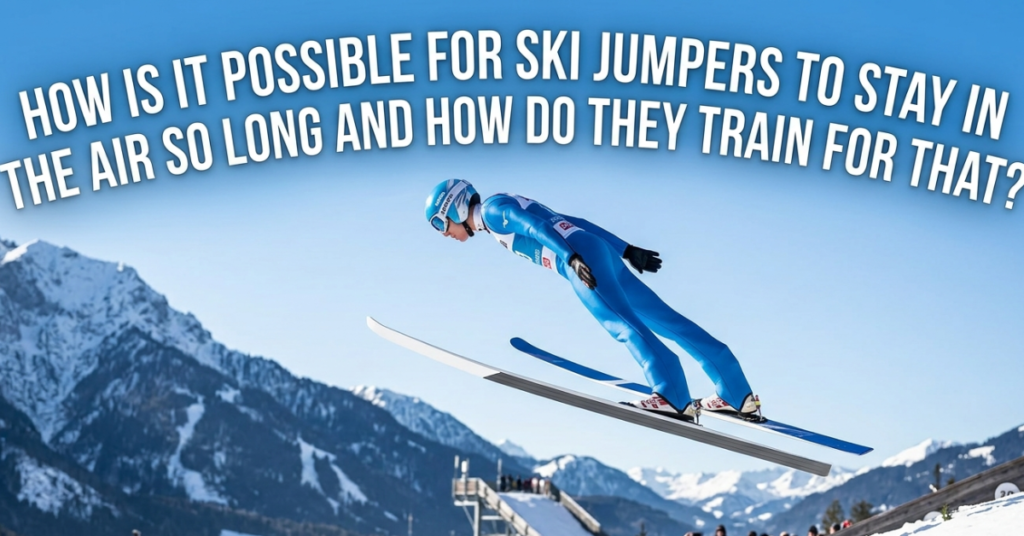

If you’ve ever watched the Olympics or a ski jumping competition, you’ve probably asked yourself: how is it possible for ski jumpers to stay in the air so long and how do they train for that?
It almost looks like they’re flying. But in reality, ski jumping is a perfect mix of physics, precision technique, body control, and years of intense training. There’s no magic—just science and skill working together at high speed.
Let’s break it down in a simple, easy-to-understand way.
The Physics Behind Ski Jumping: Why They Stay in the Air
At first glance, ski jumpers seem to defy gravity. But what’s actually happening is a balance between speed, lift, and aerodynamics.
1. Speed Creates Lift
Ski jumpers reach speeds of 80–100 km/h (50–62 mph) before leaving the ramp. This speed is essential because it generates the forward momentum needed for flight.
2. Body Position Acts Like a Wing
Once airborne, jumpers form a specific shape called the “V-style” position.
This position:
- Spreads skis into a V shape
- Tilts the body forward
- Maximizes surface area against air
This creates lift—similar to how airplane wings work.
3. Air Pressure Keeps Them Up
As air flows under and over the skis, pressure differences form. Higher pressure below and lower pressure above helps push the jumper upward.
4. Gravity Still Wins Eventually
No matter how perfect the technique is, gravity always brings them down—but the goal is to delay the fall as much as possible.
How Is It Possible for Ski Jumpers to Stay in the Air So Long and How Do They Train for That?
Now let’s answer the second half of the question: training.
Ski jumpers don’t just wake up and fly off mountains. Their training is extremely structured and scientific.
How Ski Jumpers Train for Long Air Time
1. In-Ramp Technique Training
Most training happens on ski jumps of different sizes.
Athletes practice:
- Takeoff timing
- Body posture
- Balance at high speed
Even a fraction of a second difference in takeoff can change the entire jump.
2. Strength Training (Especially Core & Legs)
Strong muscles are essential for explosive power during takeoff.
Key training areas:
- Quadriceps (for push-off strength)
- Hamstrings and glutes (stability)
- Core muscles (balance in the air)
Exercises include squats, lunges, and plyometrics.
3. Aerodynamic Position Practice
Athletes spend hours perfecting the V-style position.
They train to:
- Keep skis stable in the air
- Reduce unnecessary movement
- Maintain balance against wind resistance
Even small body adjustments can affect flight distance.
4. Balance and Coordination Drills
Ski jumpers often train using:
- Balance boards
- Gymnastics exercises
- Trampoline work
These improve body awareness mid-air.
5. Summer Training on Artificial Surfaces
Since snow isn’t available year-round, jumpers train in summer using:
- Plastic ski jumps
- Water ramps for safe landings
This allows year-round technique refinement.
6. Mental Training and Focus
Ski jumping is also psychological.
Athletes train to:
- Control fear at high speeds
- Stay calm before takeoff
- Visualize perfect jumps
Confidence plays a huge role in performance.
Why Ski Jumpers Don’t Fall Like Normal People
The key difference is direction of force.
Normal falling:
- Vertical drop straight down
Ski jumping:
- Forward momentum + lift
- Controlled glide through air
So instead of “falling,” they are gliding forward while slowly descending.
Equipment Matters Too
Ski jumpers use specialized gear:
- Long, wide skis (for better lift)
- Aerodynamic suits (reduce air resistance)
- Forward-leaning boots (better control)
Even small equipment changes can affect distance significantly.
FAQs
How is it possible for ski jumpers to stay in the air so long?
They use high speed, aerodynamic body positioning, and ski design to create lift and reduce drag.
Why do ski jumpers use the V position?
It increases surface area and generates more lift, helping them stay airborne longer.
Do stronger athletes jump farther?
Not always—technique and aerodynamics matter more than pure strength.
How long do ski jumpers stay in the air?
Usually between 5 to 10 seconds, depending on jump size.
Conclusion
So, how is it possible for ski jumpers to stay in the air so long and how do they train for that? The answer lies in a fascinating combination of physics, precision technique, strength, and mental control.
They don’t “fly” in the traditional sense—they carefully manipulate speed, body position, and air resistance to glide as far as possible before gravity takes over.
With years of training and perfect timing, ski jumpers turn a steep hill into a controlled airborne performance that looks almost impossible—but is actually pure science in action.