
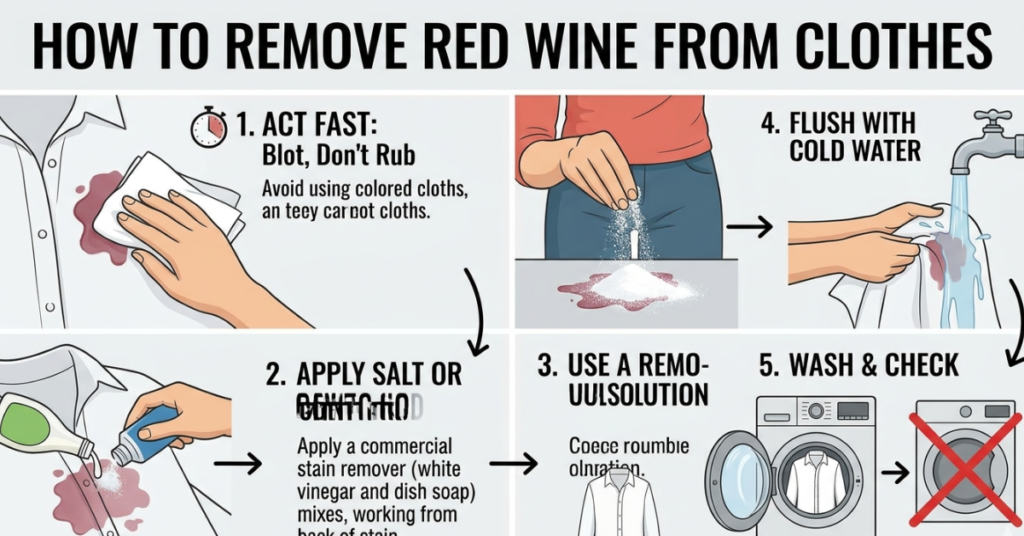

Spilling red wine on your clothes can feel like a disaster—especially if it’s your favorite shirt. But don’t worry. Knowing how to remove red wine from clothes can turn a stressful moment into an easy fix.
In this guide, you’ll learn practical, proven methods to clean both fresh and dried stains using everyday items you already have at home.
Why Red Wine Stains Are So Stubborn
Before jumping into how to clean red wine from clothes, it helps to know why these stains are tough.
Red wine contains natural pigments called tannins, which bind quickly to fabric fibers. Whether it’s a bold glass or even a Apothic Red Wine, the stain sets fast if not treated immediately.
The key is acting quickly and using the right technique.
What to Do Immediately After a Spill
Timing matters more than anything when dealing with red wine.
First steps:
- Blot the stain gently (don’t rub)
- Use a clean cloth or paper towel
- Absorb as much liquid as possible
These first seconds make a big difference when you remove red wine from clothes successfully.
How to Remove Red Wine from Clothes (Fresh Stains)
If the stain is still wet, you’re in luck.
Method 1: Salt Trick
Steps:
- Blot the stain
- Cover it completely with salt
- Let it sit for 10–15 minutes
- Rinse with cold water
Salt absorbs the wine and prevents it from setting deeper.
Method 2: Boiling Water Technique
Steps:
- Stretch the fabric over a bowl
- Pour boiling water from a height
- Let the water flush the stain out
This works especially well on sturdy fabrics like cotton.
How to Clean Red Wine from Clothes (Dried Stains)
Missed the stain earlier? Don’t worry—you can still fix it.
Method 3: Dish Soap + Hydrogen Peroxide
Steps:
- Mix equal parts dish soap and hydrogen peroxide
- Apply to the stain
- Let it sit for 10–20 minutes
- Rinse with cold water
This combo breaks down even stubborn stains.
Method 4: Vinegar + Detergent
Using something like Red Wine Vinegar can help neutralize the stain.
Steps:
- Pour vinegar directly onto the stain
- Add a small amount of detergent
- Gently rub and rinse
Vinegar helps lift pigment from the fabric.
Does the Type of Wine Matter?
Yes, it can.
Sweet Red Wine vs Dry Wine:
- Sweet red wine stains may be stickier due to sugar
- Dry wines stain more quickly but are easier to rinse
Regardless of the type, the removal process remains similar.
Fabric-Specific Tips
Different materials need different care.
Cotton & Polyester
- Can handle hot water methods
- Use salt or boiling water
Delicate Fabrics (Silk, Wool)
- Avoid heat
- Use mild detergent or vinegar
- Dab gently—don’t scrub
Denim
- Pre-treat with stain remover
- Wash in cold water
Always check the care label before trying any method.
What NOT to Do
When figuring out how to remove red wine from clothes, avoid these mistakes:
Don’t:
- Rub the stain aggressively
- Use hot water immediately (for fresh stains)
- Let it sit too long
- Put stained clothes in the dryer
Heat can permanently set the stain.
Pro Tips for Better Results
Want to improve your chances of success?
Try these:
- Always use cold water first
- Test solutions on a small area
- Repeat treatment if needed
- Air dry until stain is gone
Quick Summary
| Situation | Best Method |
| Fresh stain | Salt or boiling water |
| Dried stain | Soap + hydrogen peroxide |
| Delicate fabric | Vinegar + gentle cleaning |
| Quick action | Blot immediately |
FAQs
1. How to remove red wine from clothes quickly?
Blot the stain and apply salt immediately, then rinse with cold water.
2. Can dried red wine stains be removed?
Yes, using hydrogen peroxide and dish soap works well.
3. Does vinegar remove red wine stains?
Yes, it helps break down the stain and lift pigment.
4. Can I use hot water on red wine stains?
Only after the stain is treated—hot water can set fresh stains.
5. Does the type of wine affect the stain?
Slightly—sweet wines may be stickier, but removal methods are similar.
Conclusion
Spilling wine doesn’t have to ruin your clothes. Once you understand how to remove red wine from clothes, you can handle stains quickly and effectively.
The secret is simple: act fast, use the right method, and avoid common mistakes. Whether it’s a fresh spill or a dried mark, there’s almost always a way to fix it.