
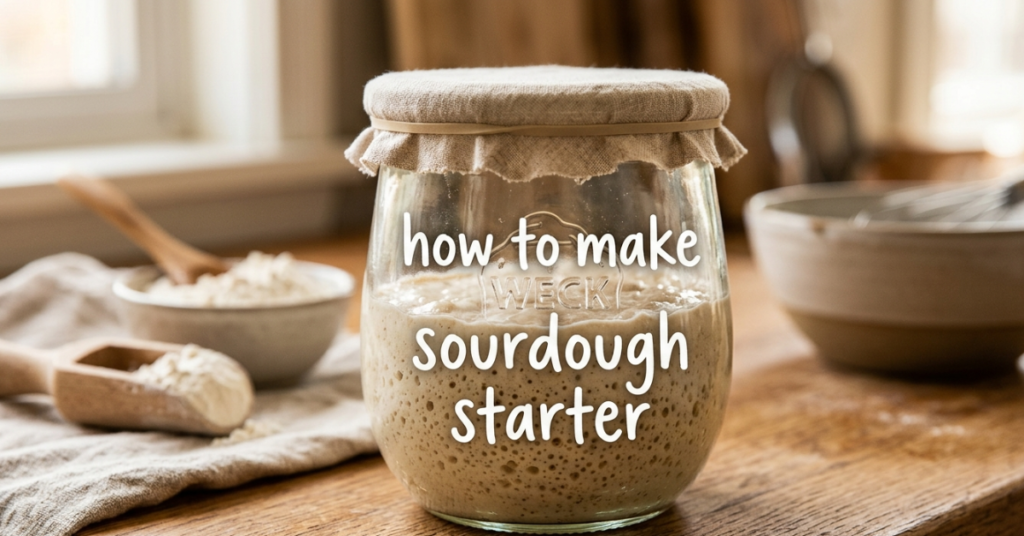

Learning how to make sourdough starter can feel a little like creating kitchen magic. With nothing more than flour, water, and time, you can cultivate a living culture that turns ordinary bread into something deeply flavorful and beautifully textured.
If you have ever wanted to bake homemade sourdough, understanding how to make sourdough starter from scratch is the first and most important step. The good news is that it is much easier than many people think.
What Is a Sourdough Starter?
A sourdough starter is a mixture of flour and water that naturally captures wild yeast and beneficial bacteria from the environment.
Over several days, this mixture begins to ferment, creating the natural leavening that makes sourdough bread rise.
A healthy starter helps:
- Raise bread naturally
- Develop complex flavor
- Improve texture
- Extend freshness
Unlike commercial yeast, a sourdough starter creates a more nuanced loaf with a slightly tangy taste.
Ingredients You Need
You only need two ingredients to make a starter.
Basic ingredients:
- 1 cup flour
- ½ cup filtered water
Best flour choices:
- Whole wheat flour
- Rye flour
- Bread flour
- All-purpose flour
Many people ask how to make sourdough starter with all purpose flour, and the answer is yes—you can. However, whole grain flour often starts fermentation faster because it contains more natural microorganisms.
Equipment You Will Need
You do not need fancy tools.
Simple supplies:
- Glass jar or container
- Spoon
- Kitchen scale (optional but helpful)
- Cloth or loose lid
A clear jar helps you easily monitor the starter’s growth.
How to Make Sourdough Starter at Home
Here is the step-by-step process for how to make sourdough starter at home.
Day 1: Mix the Starter
Combine:
- 1 cup flour
- ½ cup water
Stir until smooth.
The texture should resemble thick pancake batter.
Cover loosely and let it sit at room temperature for 24 hours.
Day 2: Check for Activity
After 24 hours, you may notice:
- Small bubbles
- Slight rise
- Mild sour smell
Even if nothing happens yet, that is normal.
Discard half the mixture and feed with:
- ½ cup flour
- ¼ cup water
Mix well and cover again.
Days 3 to 7: Feed Daily
Repeat the feeding process every 24 hours:
- Discard half
- Add fresh flour
- Add fresh water
- Stir thoroughly
- Let it rest
As the days pass, your starter should become more active.
Signs Your Starter Is Ready
Your sourdough starter is ready when it:
- Doubles in size within 4–8 hours
- Smells pleasantly tangy
- Has lots of bubbles
- Passes the float test
Float test:
Drop a spoonful into water.
If it floats, it is ready to bake with.
How to Make Sourdough Starter Stronger
Some starters need a little extra help.
If you wonder how to make sourdough starter stronger, try these tips:
Strengthening tips:
- Feed twice daily
- Keep it warm (70–78°F)
- Use bread flour
- Use filtered water
- Stir thoroughly
Warm kitchens usually create stronger starters faster.
How to Make Sourdough Starter More Sour
If you prefer tangier bread, you may ask how to make sourdough starter more sour.
Try these methods:
- Feed less frequently
- Use whole wheat flour
- Ferment at cooler temperatures
- Keep hydration slightly lower
Longer fermentation usually creates deeper sour flavor.
Can You Make Sourdough Starter With Yeast?
Technically yes, but traditional sourdough does not require it.
Some people search how to make sourdough starter with yeast, but adding commercial yeast changes the natural fermentation process.
For authentic sourdough:
Use only flour and water
That allows wild yeast to develop naturally.
Best Flour for Sourdough Starter
Different flours affect your starter differently.
Best options:
Whole wheat flour
- Faster fermentation
- Rich flavor
Bread flour
- Stronger gluten
- Stable feeding
All-purpose flour
- Easy to find
- Works well long term
Many bakers begin with whole wheat and switch to bread flour later.
Common Mistakes to Avoid
Avoid these beginner mistakes.
Mistakes:
- Using chlorinated water
- Sealing the jar tightly
- Skipping feedings
- Using dirty utensils
- Keeping it too cold
A starter needs consistency more than perfection.
FAQs
How long does it take to make sourdough starter?
Most starters take 5 to 7 days to become active enough for baking.
Can I make sourdough starter with all-purpose flour?
Yes, how to make sourdough starter with all purpose flour is simple because all-purpose flour works well, though fermentation may be slower.
Why is my starter not bubbling?
Your kitchen may be too cold, or the starter may need more frequent feeding.
Can sourdough starter go bad?
Yes. If it develops pink, orange, or fuzzy mold, discard it immediately.
Do I need yeast for sourdough starter?
No. Traditional sourdough starter relies on natural wild yeast.
Conclusion
Once you understand how to make sourdough starter, the process becomes surprisingly simple. Flour, water, patience, and regular feeding are all it takes to build a healthy culture that can last for years.
Whether you want to learn how to make sourdough starter recipe for your first loaf or strengthen an existing one, the key is consistency. Start small, stay patient, and before long, you will have a thriving starter ready to transform your homemade bread.