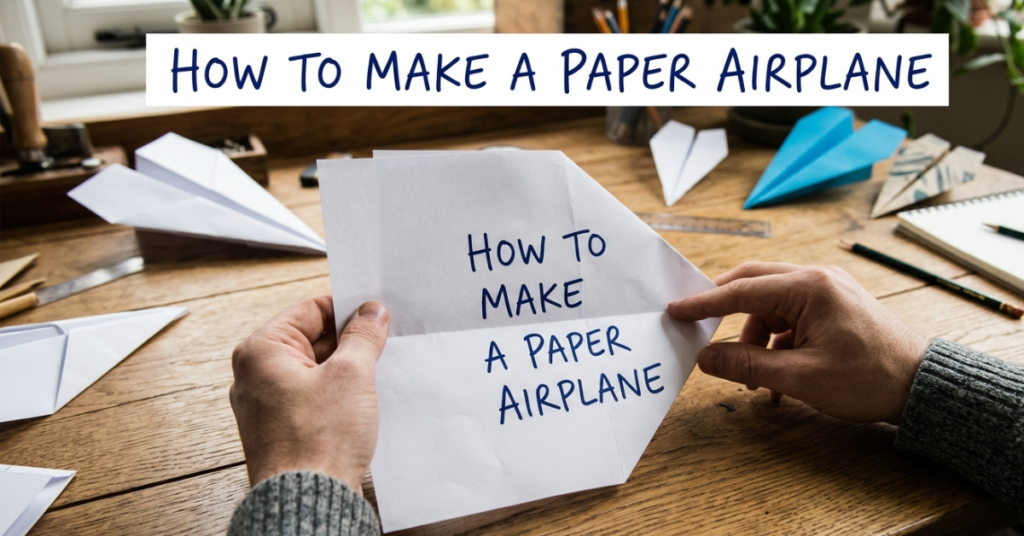

Few things feel as satisfying as folding a simple sheet of paper into something that can actually glide across a room. If you have ever wondered how to make a paper airplane, you are not alone. It is one of those timeless activities that is fun for kids, relaxing for adults, and surprisingly interesting once you understand the design behind it.
The secret to learning how to make a paper airplane that flies far is not just folding paper randomly. Small adjustments in shape, balance, and wing design can make a huge difference in how your plane performs.
What You Need Before You Start
Before learning how to make a paper airplane step by step, gather the right materials.
You only need:
- One standard sheet of printer paper
- A flat surface
- Your hands
- Optional ruler for sharper folds
Standard lightweight paper works best because it creates a balanced plane without being too heavy.
How to Make a Paper Airplane Step by Step
Follow these simple folds to create a classic airplane that flies smoothly.
Step 1: Fold the Paper in Half
Place the paper vertically.
Fold it lengthwise down the middle and crease firmly, then unfold it. This center line will guide your next folds.
Step 2: Fold the Top Corners Inward
Take the top left corner and fold it toward the center crease.
Repeat on the right side so the top forms a pointed triangle.
This creates the nose of the plane.
Step 3: Fold the Angled Edges Inward Again
Fold the new slanted edges toward the center line once more.
Now the front becomes narrower and more aerodynamic.
This is what helps create a paper airplane that flies far and straight.
Step 4: Fold the Plane in Half
Fold the plane inward along the original center crease.
The folded edges should now be inside.
Step 5: Create the Wings
Fold one side downward to form the wing.
Flip the plane and repeat on the other side.
Make sure both wings are even.
Uneven wings cause the airplane to spin.
How to Make a Paper Airplane That Flies Far
If your goal is distance, a few small tweaks can help.
For longer flights:
- Keep folds crisp and tight
- Make wings symmetrical
- Add tiny upward bends at the back
- Keep the nose slightly heavier
- Throw gently, not forcefully
A smooth launch often works better than a hard throw.
How to Make a Paper Airplane Jet Style
A jet-style design has a sharper nose and narrower wings.
To make a paper airplane jet:
- Fold the nose tighter
- Keep wings smaller
- Angle wings slightly upward
- Make the body slimmer
This style usually flies faster but may not stay airborne as long.
How to Make a Paper Airplane Easy for Kids
Children often need a simpler version.
Kid-friendly version:
- Fold paper in half
- Fold top corners inward
- Fold in half again
- Fold down wings
That is the easiest way to teach how to make a paper airplane for kids without frustration.
Common Mistakes That Ruin Flight
Sometimes the plane looks right but does not fly well.
Avoid these mistakes:
- Uneven wings
- Loose folds
- Nose too light
- Throwing too hard
- Using wrinkled paper
Small details affect performance more than most people expect.
Tips for Better Performance
Want your airplane to fly even better?
Try these expert tips:
- Test different wing widths
- Add winglets at the edges
- Use lighter paper
- Launch from shoulder height
- Adjust wing angle slightly upward
Experimenting is half the fun.
Why Paper Airplanes Actually Fly
A paper airplane flies because of four forces:
- Lift – pushes the plane upward
- Gravity – pulls it downward
- Thrust – comes from your throw
- Drag – air resistance slows it down
Good design balances these forces.
FAQs
How do you make a paper airplane that flies far?
Use tight folds, balanced wings, and a slightly heavier nose for longer flight.
What paper works best?
Standard printer paper is ideal because it balances flexibility and weight.
Why does my paper airplane dive down?
The nose may be too heavy or the wings may angle downward.
How do you make a fast paper airplane?
Use a narrow body and smaller wings for more speed.
Can kids make paper airplanes easily?
Yes, simple designs are perfect for beginners and children.
Conclusion
Learning how to make a paper airplane is simple, but making one that truly performs well takes a little technique. With careful folds, balanced wings, and a smooth throw, you can create a paper airplane that flies far and straight in just a few minutes.
The best part is that every fold teaches you something new. Try different styles, test your designs, and see just how far your next paper airplane can go.